


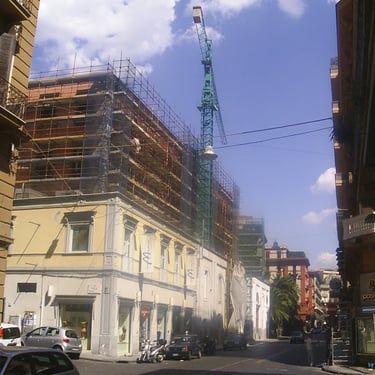
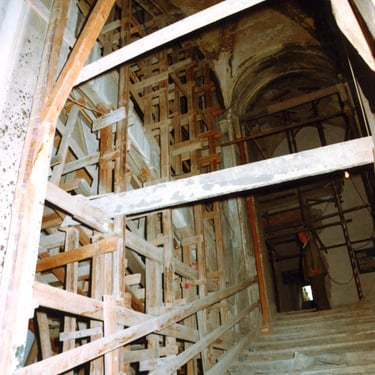
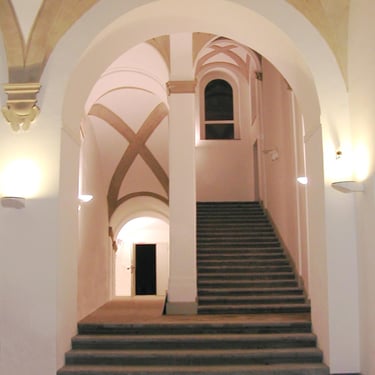
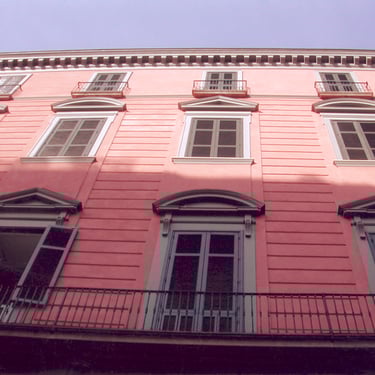
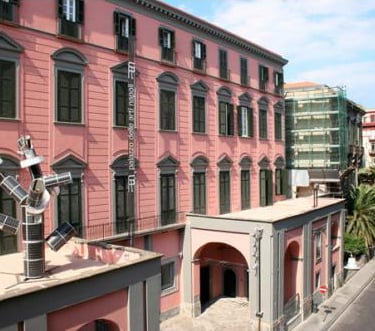
The first description of the building dates back to 1667, when it was a simple two-story country house; this character was retained until 1755, when expansions and modifications were undertaken. The most significant transformation took place between 1755 and 1765, consisting of the enlargement of the building's main façade and the creation of a central entrance aligned with the main staircase, designed by architect Luca Vecchioni for Princess Ippolita Cantelmo Stuart. Between 1842 and 1902, work was carried out that gave the building its current appearance, including the completion of the third floor and the redesign of the main façade. In 1913, major renovations were carried out, including strengthening and expanding the rear section. The building suffered serious damage when, in 1964, it was the target of a vandalistic property speculation attempt, which involved chipping away the plaster from the main façade and tampering with many interior spaces. The attempt was halted, but from that point on, the building was left abandoned for over twenty years. Finally, the City of Naples decided to designate the building as a venue for cultural activities and artistic events, requesting the Ministry of Education to authorize its expropriation in favor of the City itself. Consequently, the Administration proceeded to develop a restoration project, commissioning nationally renowned designers. The City then contracted the construction company COEDIL SUD to carry out the work. As a result, an important cultural heritage was returned to the city, restored to its original environmental values, offering a cultural resource of international significance to the public.
Restoration work on Palazzo Carafa di Roccella in Naples
Contacts
Talk to us for projects or restorations
Telephone
Tel. +39 0815519931
© 2025. All rights reserved. Cordial Sud S.r.l
VIA MIGUEL CERVANTES DE SAAVEDRA 55/A - 80133 - NAPLES
VAT number: 03439870639
CONSTRUCTION AND RENOVATION OF MONUMENTAL BUILDINGS RESTORATION